The Roles We Inherited | How Emotional Unavailability Shapes Who We Become
There is a particular kind of child who grows up faster than she should.
She is the one who reads the room before she enters it. Who manages her own emotions so no one else has to. Who becomes reliable, capable, self-contained — not because someone taught her that those were good qualities to develop, but because the environment required it of her.
If you recognize yourself in that description, this post is for you.
This week at Authentically Peculiar, we are looking at one of the quieter but more pervasive effects of the father wound: the roles we take on when a father cannot or does not show up emotionally. Who we become in the gap. And what it costs us to stay in those roles long after they have served their purpose.
When Absence Wears a Face
We often think of the father wound in terms of physical absence. The father who left. The one who was never in the picture at all.
But emotional unavailability is its own category of absence, and in many ways it is harder to name and heal because the person was technically present.
He was in the house. He sat at the table. He may have provided financially, attended events, fulfilled the external obligations that the world uses to measure a present father. By every visible metric, he was there.
But emotionally, the lights were off.
And a child in that environment learns a particular kind of loneliness. Not the loneliness of being alone, but the loneliness of being in the room with someone and still feeling completely unseen. Still feeling like your inner world, your needs, your emotions are inconvenient at best and invisible at worst.
That experience leaves a mark. Not always in ways that are easy to trace. But in the quiet, persistent ways a child begins to shrink herself to fit the emotional space that is available to her.
The Roles We Fill
When a child does not receive consistent emotional attunement from a parent, she does not simply grieve the loss and move on. She adapts.
She finds a role that makes the environment feel more manageable. A way of being that earns her some measure of safety, connection, or approval in a space where those things are not freely given.
For many women, particularly those raised in households where the father's emotional presence was limited or absent, these roles become deeply familiar.
The Strong One carries everyone else's weight because showing her own feels unsafe.
The Responsible One over-functions so that nothing falls apart, because she learned early that falling apart is not an option.
The Peacemaker keeps the emotional temperature low, anticipating conflict before it arrives, smoothing things over before anyone notices the friction.
The Good Girl earns her place through performance, through compliance, through becoming exactly what she believes is required of her.
These roles are not personality flaws. They are intelligent, creative responses to environments that asked too much of a child too soon. They deserve to be recognized as such.
And they also deserve to be examined. Because roles that protected us in childhood can quietly become cages in adulthood.
What the Role Actually Costs
Here is the part that is rarely said plainly:
Self-sufficiency, when it comes from survival rather than choice, has a cost.
It costs you the ability to receive. When you have spent years learning to need nothing, learning to handle everything, learning to minimize your needs before anyone else can reject them, receiving support starts to feel foreign. Uncomfortable. Even threatening.
It costs you authentic connection. Relationships built around a role are built around a performance. And the exhausting truth of performance is that it requires you to stay slightly hidden. The role gets the relationship. The real you waits.
It costs you access to your own needs. When you have spent long enough abandoning your needs preemptively, you can lose the ability to even identify what they are. You become fluent in what everyone else needs and a stranger to your own interior world.
None of this is your fault. It is what happens when a child has to grow up before she is ready. When the environment says, clearly or quietly, that there is no room here for your full self.
But you are not a child anymore.
And the environment has changed, even if the nervous system has not caught up yet.
The Truth Shift
Becoming self-sufficient was not your superpower.
It was your survival strategy.
A superpower is something you chose.
A survival strategy is something you built because you had no other option.
Both can look identical from the outside. Both can earn you praise, admiration, even success. But only one of them was freely chosen. And only one of them came with a cost that you have been quietly paying ever since.
Recognizing the difference is not an invitation to collapse or abandon the strength you have built. It is an invitation to choose. To decide, consciously and with full awareness, which parts of who you have become you want to carry forward and which parts you are finally ready to set down.
You are allowed to need support.
You are allowed to let people show up for you.
You are allowed to stop performing capable long enough to actually rest.
That is not weakness.
That is the beginning of something freer.
Where to Begin
This week, pay attention to the moments when you minimize a need before expressing it.
The "I'm fine" when you are not.
The "don't worry about it" when you actually want someone to worry about it.
The shrinking that happens before you have even given someone the chance to show up.
You do not have to change it yet. Just notice it.
And ask yourself honestly: Who taught me that this need was too much?
Then, gently: Is that still true?
Reflection Questions
What roles did you take on in your family that were never really yours to carry?
Where in your life are you still performing self-sufficiency when what you actually want is support?
What would it mean to let someone show up for you fully, without you managing the experience for them?
Affirmation
I am allowed to have needs and they do not make me a burden.
The roles I played kept me safe, but they are not who I am.
I am learning, slowly, to let myself be held.
This post is part of the June 2026 series at Authentically Peculiar: The Father Within — Healing the Wound, Reclaiming the Voice. Subscribe to the weekly newsletter at www.marciablane.com for continued reflection, psychoeducation, and gentle practice every Friday.
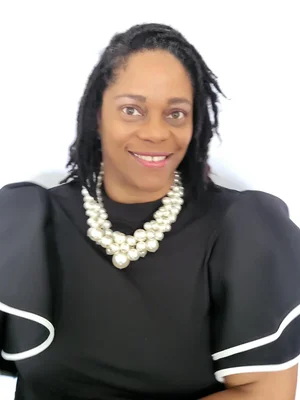
Written by Marcia Blane, LPC, NCC, C.Ht.
Licensed Mental Health Counselor | Trauma-Informed Life Coach | Clinical Hypnotherapist
www.marciablane.com