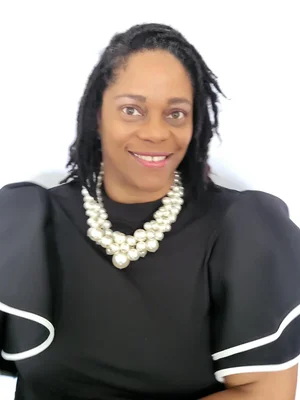
Strong Has a Cost | What Nobody Told You About the Strength You've Been Carrying
You have been strong for a long time.
Not the kind of strong that feels good — expansive, grounded, chosen. The kind that became necessary. The kind that learned to function through pain, show up through exhaustion, and keep it moving when everything inside you was asking — quietly, persistently — to stop.
And somewhere along the way, that strength became your identity.
Not because you chose it. But because it was chosen for you, by circumstances that didn't leave room for anything softer.
This is not a post about celebrating that strength. There are plenty of those.
This is a post about what it has cost you — and what becomes possible when you finally set some of it down.
Where This Kind of Strength Comes From
There is a particular kind of strength that develops in environments where emotional needs aren't consistently met.
It looks like competence. It looks like reliability. From the outside, it can even look like thriving. This person has it together. This person doesn't fall apart. This person can be counted on.
But underneath that exterior is a nervous system that learned something early and learned it deeply: if I fall apart, no one is coming. So I cannot fall apart.
That is not strength built on safety. That is strength built on the absence of it.
Psychologists sometimes refer to this pattern as compulsive self-reliance — a form of hyper-independence where self-sufficiency becomes less of a preference and more of a defense. Where asking for help feels genuinely unsafe, even when the people around you are trustworthy. Where rest feels irresponsible. Where receiving — compliments, support, care — feels suspect, like something you should be careful about.
It is an intelligent adaptation. In the environments where it developed, it was likely necessary.
But it is also exhausting in a way that is hard to articulate — because the exhaustion doesn't just live in the body. It lives in the ongoing effort of maintaining a version of yourself that never gets to put anything down.
The Difference Between Chosen Strength and Survival Strength
Not all strength is the same, and this distinction matters.
Chosen strength is the kind that emerges from a regulated nervous system. It is grounded, flexible, and sustainable. It allows for rest without guilt, receiving without suspicion, and vulnerability without collapse. It bends. It knows its limits. It asks for help not because it is weak, but because it understands that connection is part of how humans function.
Survival strength is different. It is rigid where chosen strength is flexible. It cannot afford to bend, because somewhere in the nervous system there is an old belief that bending means breaking. It is sustained not by safety but by the ongoing management of threat — real or perceived.
Many of us were never taught the difference. We were praised for the survival version. We were rewarded for functioning under pressure, for not making things harder on other people, for being the one who held it together.
And so we kept going. We built entire identities around it.
The question worth sitting with is this: when is the last time you felt strong and held at the same time? Not strong instead of held — but both, simultaneously?
If that is difficult to imagine, that tells you something important.
What It Has Cost You to Stay That Strong
This is the part that tends to surface grief. Because maintaining that level of self-sufficiency comes at a real price — and most of us have been paying it without ever stopping to add it up.
It costs you presence. When you are always managing, always performing capability, you are rarely fully here — in your body, in the moment, available to yourself and the people around you. There is a constant background processing running: what needs to be handled, what might go wrong, what you need to make sure no one has to deal with. Presence requires a degree of safety the performing self cannot access.
It costs you intimacy. Real connection — the kind that actually nourishes — requires being seen. Not the competent, capable version of you, but the full version. The one that is uncertain sometimes, struggling sometimes, in need of support sometimes. When the armor stays on, people can love who they are allowed to see. But they cannot reach the rest of you. And that unreachable part is often the part that is most hungry to be known.
It costs you your body. The nervous system is not designed to sustain chronic high functioning without adequate restoration. Over time, unacknowledged need and unprocessed stress find somatic expression — in fatigue that sleep doesn't fix, in illness that arrives when you finally slow down, in a body that keeps sending signals you have learned to override. The body keeps score. And eventually, it stops accepting the minimum.
It costs you yourself. Perhaps most quietly and most significantly, compulsive self-reliance costs you access to the softer, more open, more fully human parts of who you are. The parts that wanted to be taken care of sometimes. The parts that were curious and playful before they learned to be useful. The parts that got set aside because there wasn't room for them in the environment you were surviving.
Those parts are not gone. They have simply been waiting for conditions to feel safe enough.
This Is Not About Falling Apart
Before going further, I want to address something directly — because I know where the resistance tends to live.
This is not an invitation to stop functioning. It is not suggesting that you abandon your responsibilities, become someone who cannot be counted on, or trade one extreme for another.
Gentle power — which is the destination this work is moving toward — is not the absence of strength.
It is strength that no longer requires you to disappear in order to maintain it.
It is the capacity to be capable and honest about your limits. Dependable and willing to receive support. Present for others and genuinely present for yourself.
It is what becomes possible when you stop bracing long enough to let the ground hold you.
You have been holding yourself up for so long that you may have forgotten the ground is there. It is. And you are allowed — even now, even after all of this — to let it do some of the work.
Why This Is a Nervous System Conversation
Here is something worth understanding clearly: the shift from compulsive self-reliance toward genuine rest and receiving is not primarily a mindset shift. It is a nervous system shift.
You cannot think your way into feeling safe enough to soften. The part of the brain that manages threat response — the limbic system, and in particular the amygdala — does not respond to logic or intention. It responds to experience accumulated over time.
This means the work is embodied and it is slow. It happens in small, repeated moments of choosing differently:
Letting someone help you when your default would be to decline. Sitting with discomfort instead of immediately moving to fix or manage it. Allowing yourself to rest before you have finished earning it. Saying "I'm not okay" to someone safe, when you're not okay.
Each of these moments — small as they seem — delivers new information to a nervous system that has been operating on an old story. The story that you have to manage everything. The story that your needs make you a burden. The story that the only version of you that is acceptable is the one who has it together.
None of those stories were ever true. They were adaptive — they helped you survive a particular environment at a particular time. But they do not have to be the operating system for the rest of your life.
Where to Begin
You do not have to dismantle everything at once. Healing does not work that way, and attempting it usually just creates another performance — this time of being someone who is healing correctly.
Begin with noticing.
Notice where you automatically say "I'm fine" when you aren't. Notice where you take things back on rather than let someone else carry them. Notice where rest feels earned rather than inherent. Notice the moments when receiving something — support, help, care — produces discomfort rather than relief.
Those moments of noticing are not small. They are the beginning of the nervous system recognizing its own patterns. And recognition, all by itself, creates the possibility of something different.
From noticing, you can begin asking one question: Is there one place this week where I could choose differently?
Not everywhere. Not all at once. Just one place.
That is how survival strength begins to soften into something more sustainable. Not through a dramatic dismantling, but through small, consistent choices that teach the nervous system a new story.
You are allowed to be strong and held at the same time.
Both have always been available to you.
This post is part of Authentically Peculiar's May series on Reparenting, Grief, and Gentle Power.
Written by Marcia Blane, LPC, NCC, C.Ht.
Licensed Mental Health Counselor | Trauma-Informed Life Coach | Clinical Hypnotherapist
www.marciablane.com